

Padel Tennis Court Specifications
Whether you are a real estate developer planning a residential compound, a school adding a sports facility, or an investor building a padel club, understanding the official padel tennis court specifications before breaking ground is not optional — it is the foundation of every successful build. Getting the dimensions wrong, choosing the wrong surface, or installing non-compliant walls can mean costly reconstruction, rejected insurance, or a court that simply cannot host competitive play.
This guide covers everything you need to know: official FIP measurements, wall and glass standards, flooring options, lighting requirements, and the structural details that separate a court that lasts from one that disappoints.
Official Court Dimensions According to FIP Standards
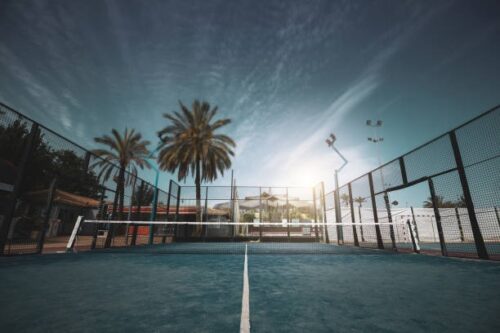
The International Padel Federation (FIP) sets the global standard for all padel court dimensions. According to FIP regulations, a standard padel court must measure 20 metres in length and 10 metres in width, with a tolerance of no more than 0.5% above or below those figures.
The total playing area is therefore 200 square metres, but the surrounding space matters just as much. You need a minimum of 0.5 to 1 metre of clearance on each side and 1.5 to 2 metres at each end to allow for player movement and safety zones. In practical terms, plan for a total footprint of approximately 22 × 13 metres when selecting your site.
The court is divided into two equal halves by a net set at a height of 88 cm at the centre and 92 cm at the posts. Each half is further divided by a service line running parallel to the net, creating the service boxes used during play.
Wall Construction, Glass Panels, and Mesh Requirements
Walls are what define padel as a sport, and their construction is one of the most technical aspects of the build. A standard court uses a combination of glass panels and metallic mesh fencing, each placed in specific zones.
The back walls on each end of the court must be solid tempered glass, rising to a minimum height of 3 metres. Above 3 metres, the structure can extend upward using metallic mesh fencing up to a total height of 4 metres. Side walls follow a different configuration: the first 2 metres from each back wall are solid tempered glass, and the remaining side sections are metallic mesh.
The glass used must be tempered safety glass of at least 10 mm thickness, certified to withstand the impact of repeated ball strikes and player contact without shattering dangerously. The metal mesh must have an aperture of no more than 5 × 5 cm and be rigid enough to prevent deformation during play.
For outdoor courts, the entire structure must be assessed for wind load resistance, and the foundation and post-anchoring system must be engineered accordingly — particularly in coastal or high-wind zones.
Padel Tennis Court Surface Specifications and Flooring Options
The playing surface is where padel tennis court specifications have the most direct impact on player performance, injury prevention, and long-term maintenance costs. The FIP approves several surface types, and the right choice depends on whether your court is indoors or outdoors, your climate, and your budget.
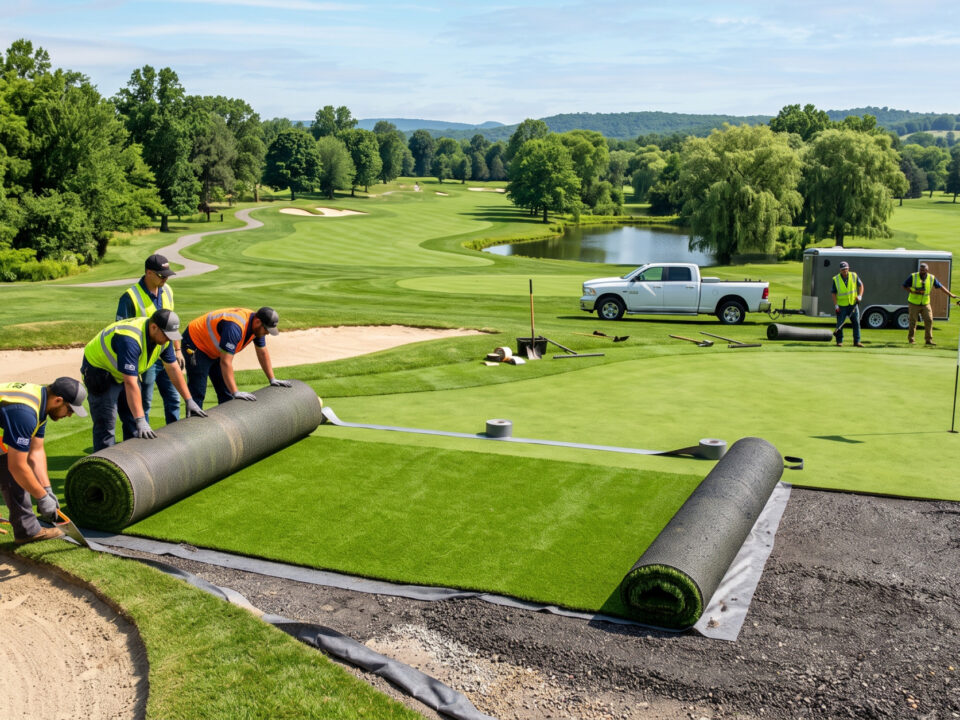
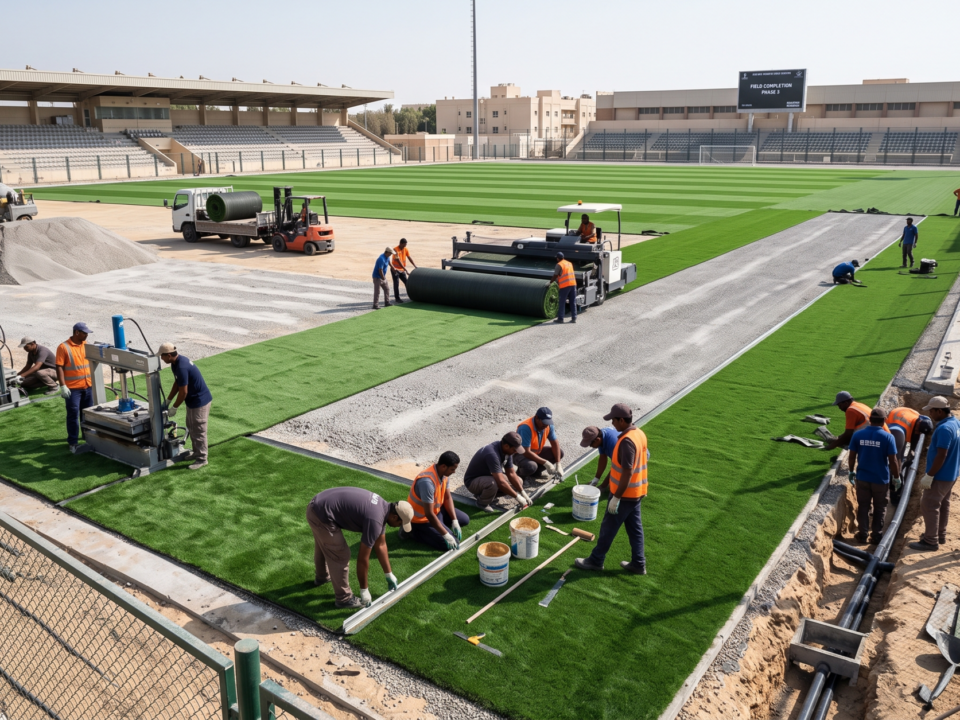
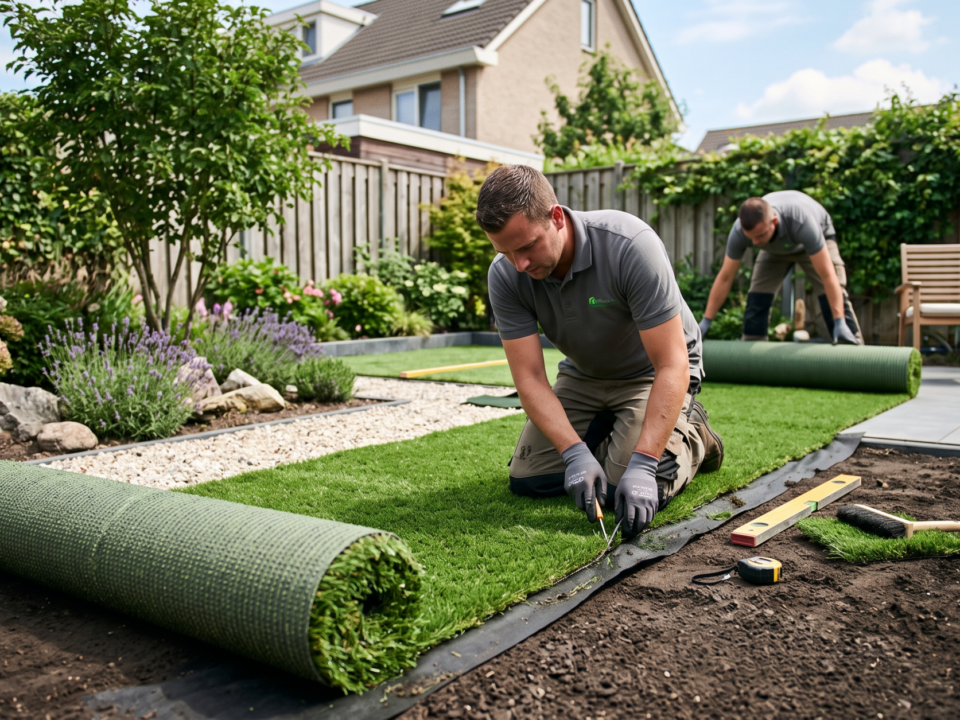
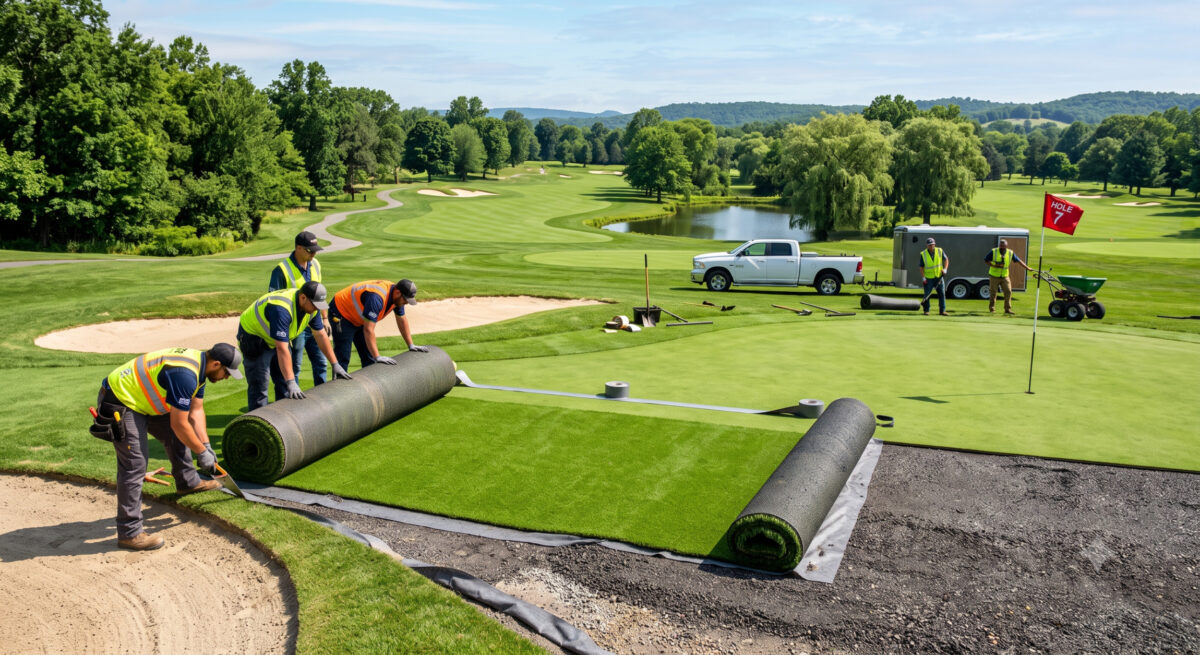
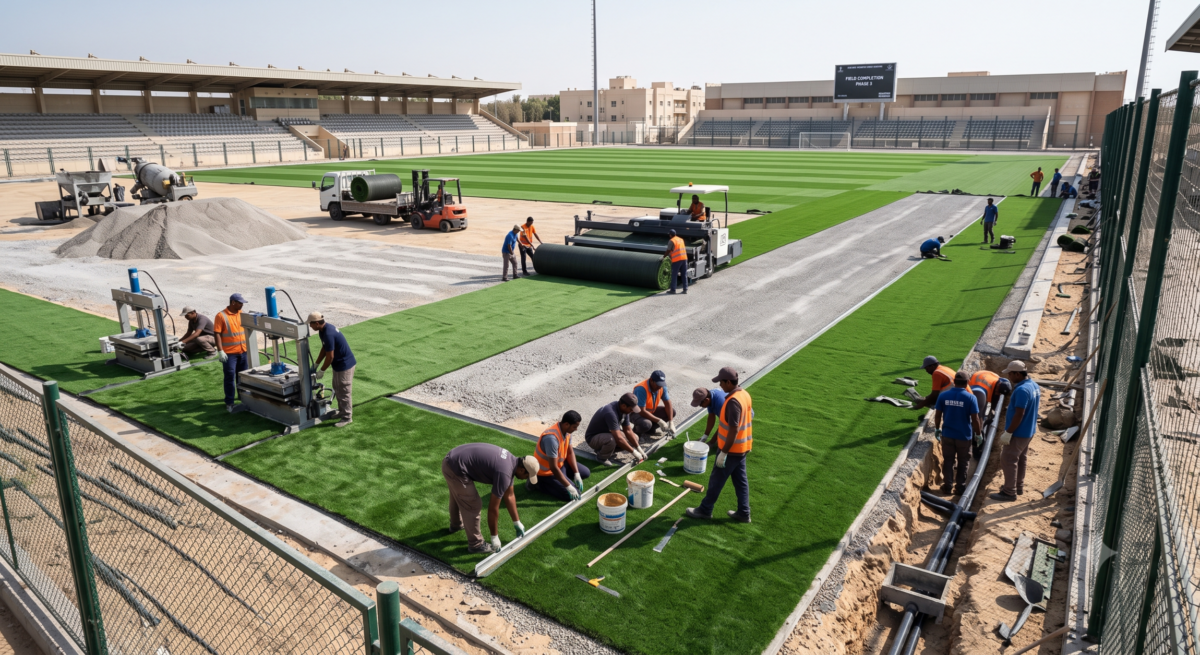
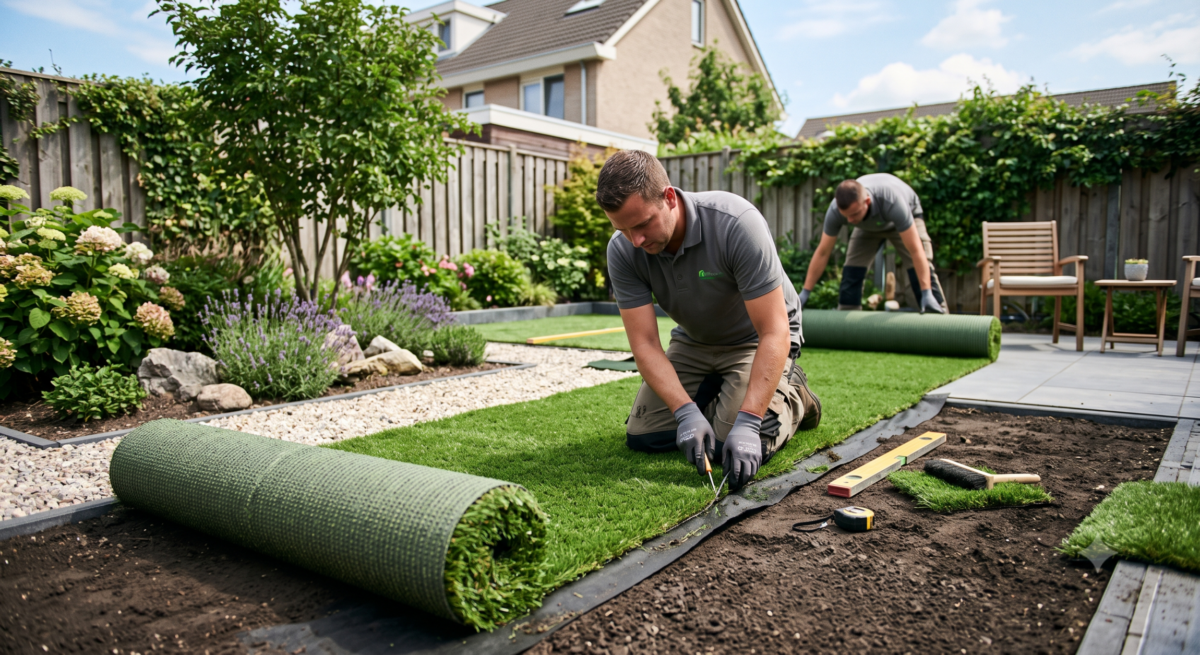
Artificial Grass (ASTurf) is the most popular choice globally for outdoor padel courts. It is installed over a shock-absorbing rubber sub-base and topped with silica sand or rubber infill to control ball bounce and player grip. The pile height should be between 8 mm and 12 mm for optimal play characteristics.
Acrylic Hard Courts offer a more consistent bounce and lower maintenance requirement. Common in indoor facilities and high-usage commercial clubs, they provide excellent grip and durability but require a perfectly level sub-base.
Porous Concrete or Asphalt Base is used as the structural foundation under both surface types for outdoor courts, with a drainage gradient of 0.5% to prevent water pooling.
All surfaces must have a non-slip finish and pass FIP ball-bounce testing to be approved for competitive use.
Artificial Turf (ASTurf) is the most popular choice globally for outdoor padel courts”
Lighting, Drainage, and Technical Requirements
A padel court without proper lighting is only usable for half the day — a significant commercial disadvantage. FIP recommends a minimum illumination level of 500 lux measured at playing height for recreational use, and 750 lux or above for competition-level courts. Lights should be positioned to minimise glare for players looking up to play lobs or overheads.
LED sports lighting is now the standard for new builds, offering lower energy consumption, longer lifespan, and superior colour rendering versus traditional metal halide fixtures. Fixture height should be between 6 and 8 metres for optimal light distribution across the full court surface.
For outdoor courts, drainage must be integrated into both the surface design and the surrounding perimeter. A French drain or channel drain system around the court perimeter handles heavy rainfall and prevents the surface from becoming waterlogged.
Prime Sport Padel Court Solutions — Available for Order Now
Understanding the specifications is step one. Executing them to the required standard is where experience matters. Prime Sport supplies and installs all components needed to build a fully FIP-compliant padel court, including certified tempered glass panels, galvanised steel structure, metallic mesh, professional-grade artificial grass surfaces, acrylic flooring systems, and LED sports lighting packages.
Every project we take on goes through a detailed site assessment, structural engineering review, and a complete material specification plan before a single foundation is poured. Whether you are building one court or a multi-court facility, our team delivers the full turnkey solution from design through to handover.
You can place your order, request a site assessment, or get a detailed project quotation right now by contacting our team directly. Courts are currently being delivered across Egypt and Africa — and yours can be next.
Common Questions About Padel Court Construction
Can a padel court be built indoors? Yes. Indoor courts follow the same FIP padel tennis court specifications for dimensions and structure, but require ceiling clearance of at least 6 metres and dedicated HVAC for air circulation and humidity control.
How long does construction take? A single outdoor court on a prepared foundation typically takes 3 to 5 weeks from structure installation to final surface. Site preparation and foundation work add additional time depending on ground conditions.
What is the minimum land area required? For a single court, plan for a minimum of 290 square metres of clear, level ground including safety margins and perimeter drainage.
Do I need planning permission? In most jurisdictions, yes. An outdoor padel structure qualifies as a permanent installation and requires building permits. Prime Sport can advise on documentation requirements for your specific location.
Build Your Court the Right Way
Building a padel court is a long-term investment, and one that pays back through membership revenue, property value uplift, and competitive positioning. But that return only comes when the court is built correctly — to the right dimensions, with the right materials, and on the right foundation.
The padel tennis court specifications outlined in this guide represent the minimum standard you should accept from any contractor. Anything less creates liability, performance issues, and ongoing maintenance headaches that cost far more to fix than they would have cost to get right the first time.
If you are planning a padel court project and want to work with a team that understands both the technical requirements and the commercial realities of facility development, Prime Sport is ready to help. Contact us today for a free consultation and a project proposal tailored to your site and budget.
📞 Call us now: 01114339996 — 01508039996