

Creating an authentic golfing experience right at home or within a commercial sports facility requires precision engineering. That is exactly why finding the premium putting green turf for sale has become a top priority for those looking to blend top quality with affordable prices.
The demand for specialized outdoor environments and professional sports flooring has experienced a massive shift recently. Golf enthusiasts, commercial property owners, and luxury residential developers are stepping away from the endless maintenance cycle of natural grass. Instead, they are turning toward high-performance synthetic alternatives to create their dream golf zones.
Investing in a specialized golf surface is not just about aesthetics; it is about ball roll, true stimpmeter speeds, and structural durability. Standard landscape grass simply cannot handle the physical demands of a consistent golf stroke. Whether you are looking to design a small backyard corner, an office leisure zone, or a massive commercial resort feature, selecting the right synthetic surface is paramount. Let’s dive deep into what makes a synthetic golf green successful, how it integrates with wider sports flooring projects, and how to maximize your investment.
What Factors Determine the Quality of Premium Golf Surfaces?
When scanning the market for elite golf solutions, it is easy to assume all green synthetic rolls are identical. However, the internal technology and manufacturing specifications tell a completely different story. Authentic putting green turf requires a specialized texturized pile, usually made from high-grade polyethylene or polypropylene, designed to stand completely upright without directionality.
Pile Height and Texturized Fibers
Unlike standard landscape grass that mimics long, soft blades, authentic golf fabrications feature short, tightly curled fibers. Typically, a pile height between 12mm to 15mm is ideal for this purpose. This specific texturized fiber ensures that the golf ball rolls smoothly in every direction without catching or veering off course.
Gauge and Stitch Rate
The density of the stitches determines how firm the surface remains under foot traffic. A loose stitch rate results in a spongy surface, which ruins ball velocity and predictable breaks. Premium putting green turf variations prioritize dense, tight cross-stitching to replicate the exact feel of a championship-grade country club green.
Can You Use Putting Green Turf for Other Sports Flooring and Landscapes?
A frequent question among property developers is whether golf turf can double as a multi-sport surface. While putting green turf is highly specialized for rolling mechanics, it is inherently a key part of the broader sports flooring and artificial turf ecosystem. Understanding how it interacts with other surfaces can save you significant time during multi-use design phases.
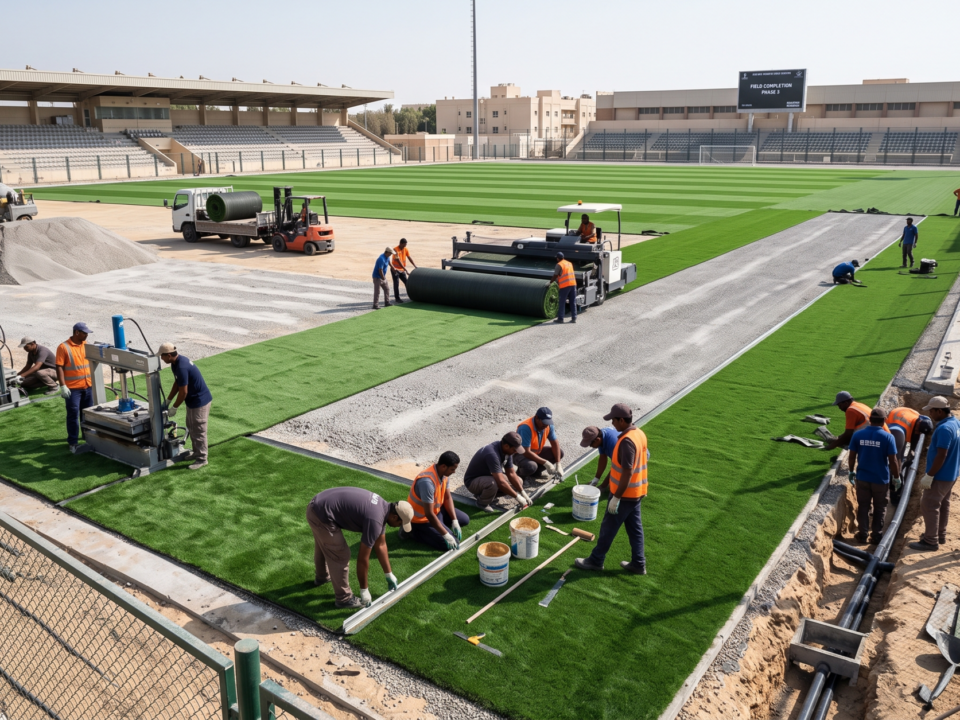
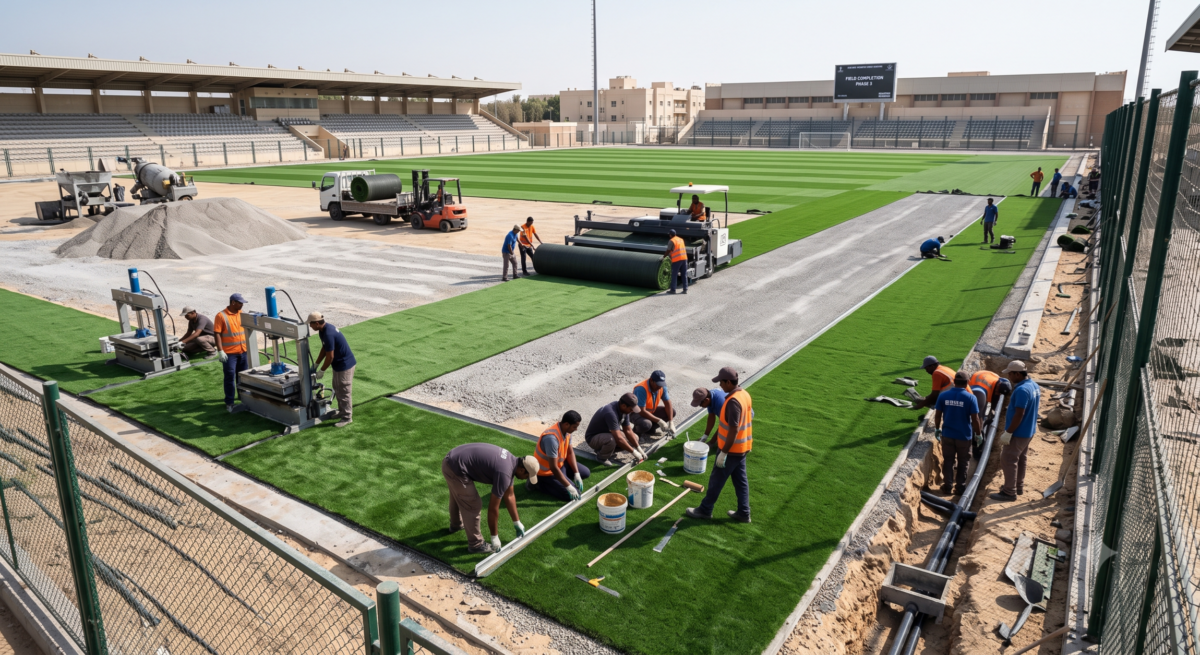
Football and Soccer Fields: These fields require much longer pile heights (usually 40mm to 60mm) packed with rubber infill to absorb heavy cleat impacts. Therefore, specialized golf turf is far too short and dense for football but acts as an excellent bordering material.
Padel and Tennis Courts: Modern padel courts utilize fibrillated or monofilament synthetic grass filled with micro-silica sand. The texture of tennis turf is somewhat similar to short-game surfaces, focusing on flat, predictable bounces, though tennis variants generally favor slightly different fiber elasticities.
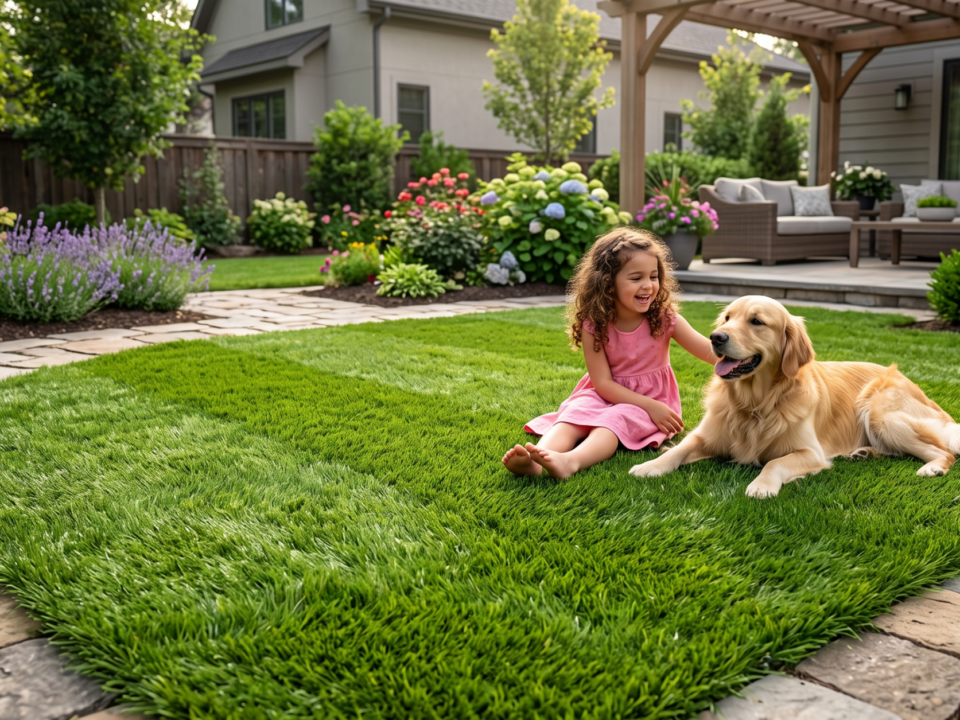
Residential Landscape Design: Mixing textures creates stunning visual depth. Many architects install a flawless, short-pile putting green turf directly adjacent to lush, 40mm long-blade artificial grass to form a beautiful, multi-layered backyard oasis.
Why Is Professional Infill Critical for a Synthetic Surface Installation?
Buying the raw material is only half the battle won. The secret behind a true-rolling surface lies entirely within the installation sub-base and the subsequent infill process. Without proper infill, even the most expensive premium product will fail to deliver accurate ball behavior on the course.
Silica sand infill serves multiple hidden functions within the golf green. First, it weighs the turf backing down securely, preventing any shifting, bubbling, or wrinkling over time. Second, by brushing specialized round-grained sand into the fibers, you can adjust the speed of the green. More sand compresses the fibers slightly, allowing the ball to glide faster across the putting green turf, mimicking professional tournament standards. For a comprehensive historical look at how synthetic polymers revolutionized modern sports facilities, you can read more about the evolution of artificial turf on Wikipedia.
How to Install Synthetic Golf Greens Successfully Step-by-Step
A professional installation is what separates a mediocre DIY project from a PGA-level facility. If you want to make sure your custom short-game area functions flawlessly, the ground preparation must be immaculate.
Ground Excavation and Sub-Base Preparation
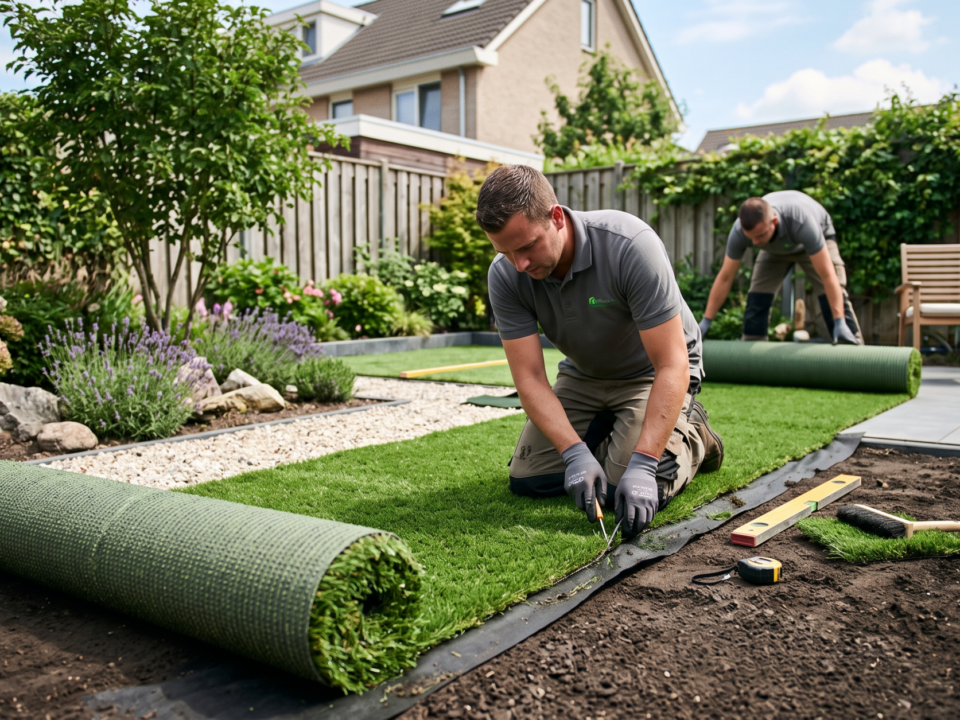
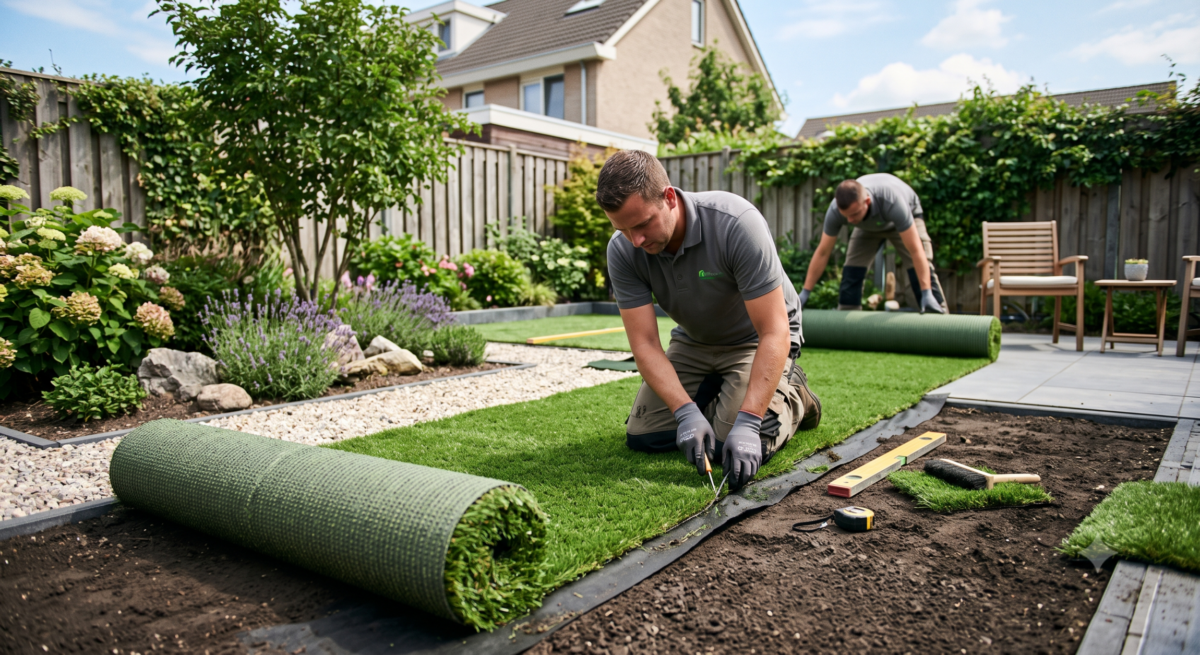
First, the existing soil or natural grass must be removed completely to a depth of several inches. After clearing the area, a sub-base consisting of crushed stone, gravel, or decomposed granite is laid down and heavily compacted. This phase is crucial because any slope, dip, or bump in the sub-base will reflect directly on the surface of your putting green turf.
Seaming and Securing the Backing
Once the base is perfectly smooth and sloped for drainage, the artificial grass is rolled out carefully. It is essential to let the turf acclimatize to the sun for a few hours before cutting. Specialized outdoor seaming tape and industrial-grade glue are used to merge the seams seamlessly, ensuring no visible gaps or lines ruin your putting line.
FAQs: What Real Buyers Ask About Golf Turf in Egypt
How much does professional golf turf installation cost?
The total financial investment depends heavily on sub-base preparation rather than just the price of the grass itself. An unlevel concrete base or raw soil requires grading, compacted crushed stone, and shock-absorption layers before the turf is rolled out. Total costs vary based on whether you choose imported Turkish or European materials versus local premium fabrications.
Can synthetic golf greens withstand harsh summer heat and heavy rain?
Yes, high-tier putting green turf is engineered with advanced UV-stabilized inhibitors built directly into the synthetic masterbatch. This prevents the vibrant green color from fading under intense sunlight. Furthermore, the specialized backing features porous drainage holes, allowing water to pass through effortlessly without pooling on your playing surface.
What is the average lifespan of a backyard golf green?
With minimal but consistent care, a premium synthetic golf green easily lasts anywhere from 8 to 15 years. Because it does not experience the deep cleat gouging typical of football pitches, the structural wear is significantly lower, making it one of the most durable investments in the entire landscape and sports flooring industry.
Pro Maintenance Practices to Extend Your Artificial Surface Lifespan
While you can happily say goodbye to mowing, watering, and chemical fertilizing, synthetic surfaces still require basic maintenance to protect your warranty and performance:
Debris Removal: Keep leaves, twigs, and organic matter off the surface using a leaf blower or a soft plastic rake to prevent weed growth within the sand layer.
Regular Brushing: Use a synthetic stiff-bristled broom to brush the surface against the grain once every few months, ensuring the fibers remain perfectly upright.
Infill Replenishment: Over time, heavy wind or rain can slightly displace the silica sand. Adding a light top-dressing of sand every year keeps the ball rolling smoothly on your putting green turf.
The Economic Benefits of Investing in Commercial Golf Greens
For commercial developers, sports clubs, and luxury resorts, installing a premium synthetic amenity is a highly lucrative move. Golf features attract high-paying clientele who appreciate premium leisure activities. Unlike natural grass, which demands daily water irrigation and expert greenkeepers, synthetic putting green turf cuts down operational overhead costs by over 70% almost instantly.
Furthermore, the year-round availability of a synthetic court guarantees non-stop booking revenue for commercial sports clubs. Whether it is the middle of a scorching hot summer or a rainy winter week, your sports surface remains in pristine, playing condition without muddy patches or dry spots. This reliability accelerates the return on investment (ROI) for business owners in the sports sector.
Elevate Your Space with Premier Sports and Landscape Solutions
Achieving a flawless short-game area or a fully integrated sports venue requires partnering with structural experts who understand the intricate balance of materials. From high-end padel court installations to bespoke residential golf designs, selecting raw materials backed by international certifications ensures long-term financial viability.
If you are ready to stop dreaming about the perfect setup and want to start building, exploring tailored sourcing solutions is your logical next step. We invite you to visit the official Prime Sport Store to explore an elite selection of texturized putting green turf, sports court floorings, and premium landscaping options designed to deliver exceptional longevity at competitive industry prices.