


padel tennis
Padel Tennis: A Fun and Social Racket Sport
Padel tennis is an engaging racket sport typically played in doubles on an enclosed court that is about 25% smaller than a traditional tennis court. The court features glass walls that allow players to hit the ball after it bounces off them, similar to squash, adding a unique strategic dimension to the game.
The Origins of Padel Tennis
The roots of padel tennis trace back to 1969 in Acapulco, Mexico, where Enrique Corcuera invented it. The sport quickly gained popularity and is now widely played in countries such as Spain, Mexico, Italy, and Andorra, as well as many Latin American countries like Argentina. The game is also experiencing significant growth in the Middle East, particularly in Saudi Arabia, Qatar, Kuwait, and the United Arab Emirates, in addition to its rapid spread across Europe and other continents.
Basic Rules of Padel Tennis
- Each point begins with a diagonal serve to the opponent’s court, similar to tennis.
- The player must allow the ball to bounce only once on their side of the court before hitting it, and the ball must be struck below waist level.
- At least one foot of the serving player must remain on the ground during the serve.
- The serving player’s feet must not touch or cross the service line during the serve.
- Scoring is the same as in tennis.
- The team that wins the point gets the right to serve the next point.
- The team that wins six games with a two-game advantage wins the set.
Construction and Legal Specifications of a Padel Tennis Court
First: Court Dimensions:
- The dimensions of a doubles court are 20 meters long and 10 meters wide.
- A singles court has the same length (20 meters) but a width of only 6 meters.
- The construction of a court requires a minimum area of 21 x 11 meters, plus an additional 0.5 meters on each side. Therefore, the minimum area needed for a doubles court is 231 square meters.
Second: Components of a Padel Tennis Court:
A padel tennis court consists of the following basic elements:
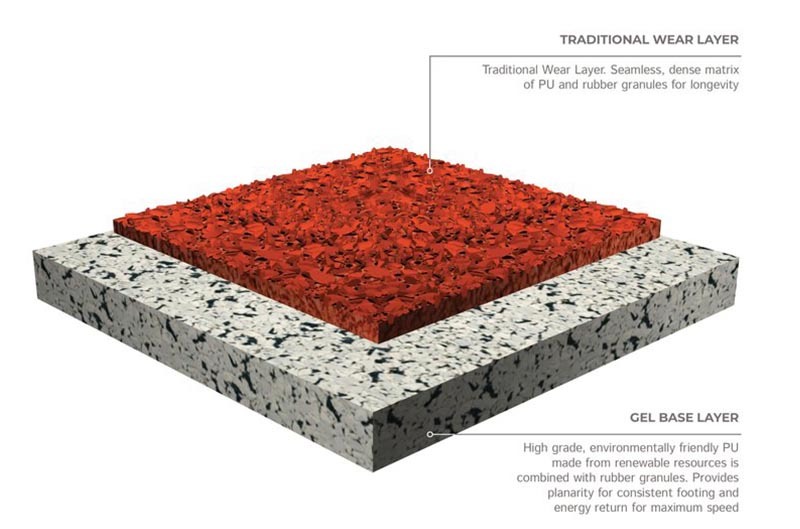
- Surface: Usually made of artificial turf, tartan, or acrylic. The surface must be perfectly level and free of any obstacles that could affect the movement of the ball and players.
- Walls: Often made of tempered glass or metal. The walls must have a flat surface and high resistance to breakage to withstand repeated ball impacts.
- Net: Made of materials such as nylon or polyester. It must be firmly attached to the back wall of the court and divide it into two equal halves.
- Court Lines: The court surface is marked with clear lines to define the boundaries of the court, different playing areas, and the service box.
- Court Lighting: Adequate lighting is provided for padel courts, usually with four light poles, each with a total height of 6 meters, to ensure clear visibility during play at different times.
Advantages of Padel Tennis
Padel tennis has many positive aspects, most notably:
- Social Sport: It is a fun social activity that can be played with friends and family, enhancing social bonds.
- Relatively Safe: Thanks to the glass walls surrounding the court, padel tennis helps reduce the chances of injuries resulting from the ball unexpectedly going out of play.
- Suitable for Everyone: It is considered an easy sport to learn and is suitable for all ages and different skill levels, making it accessible to everyone.